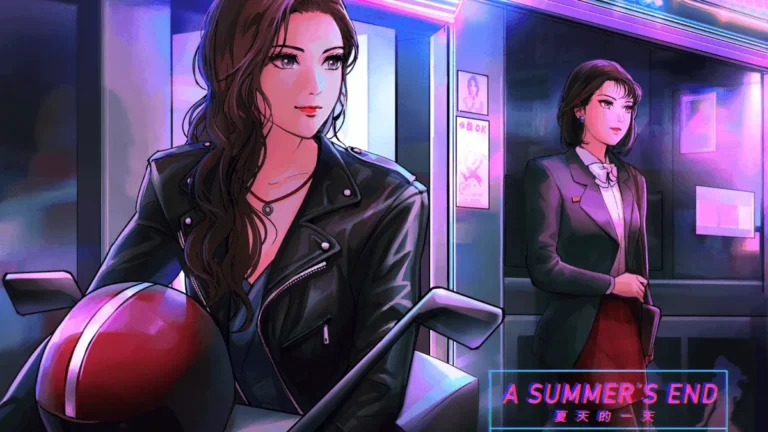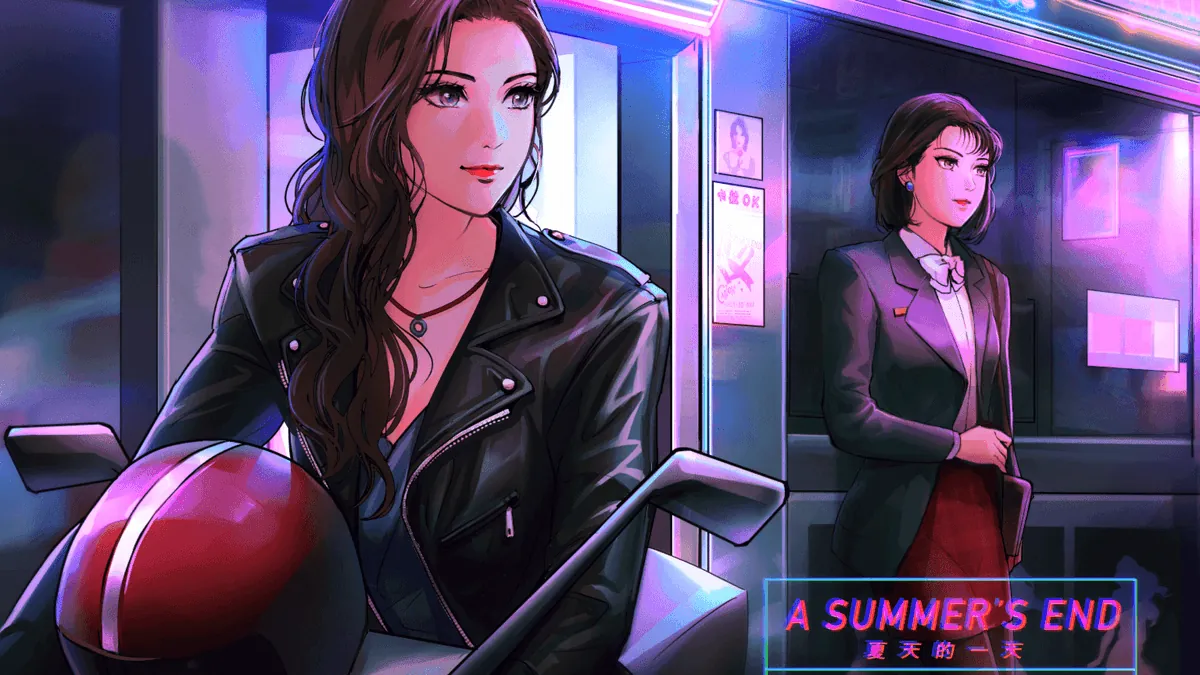
A Summer’s End – Hong Kong, 1986
Play A Summer’s End – Hong Kong, 1986
A Summer’s End – Hong Kong, 1986 Screenshots

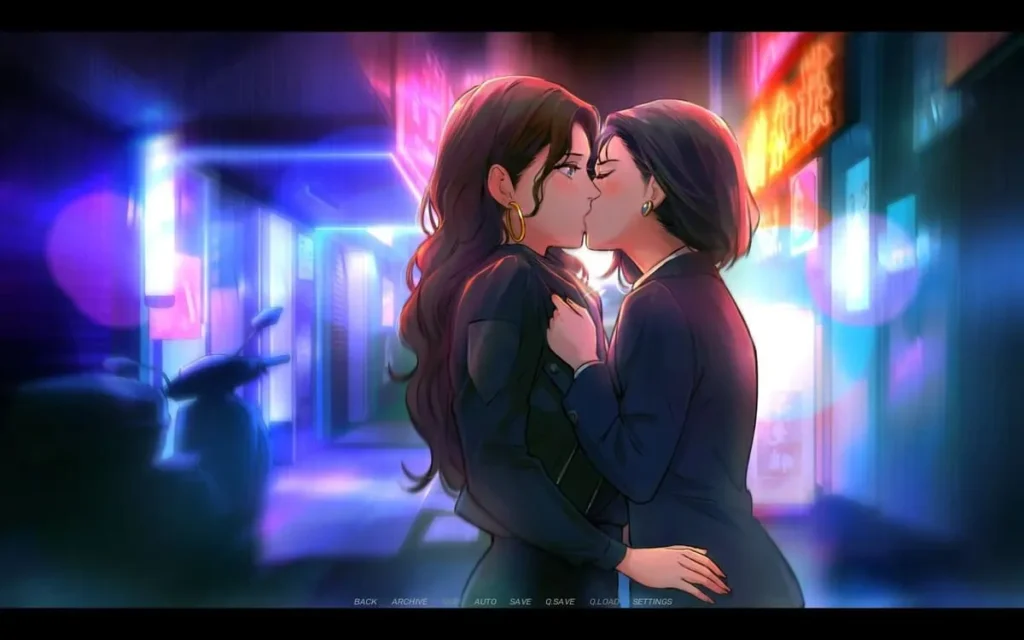






A Summer’s End – Hong Kong, 1986 review
Discover the heartfelt yuri story of Michelle and Sam in 1986 Hong Kong
A Summer’s End – Hong Kong 1986 is a captivating visual novel that tells the story of Michelle, a reserved office worker, and Sam, a free-spirited video shop owner, whose chance meeting in 1986 Hong Kong blossoms into a deep romantic relationship. Set against the vibrant backdrop of pre-handover Hong Kong, this indie game by Oracle and Bone masterfully blends retro anime aesthetics with a poignant LGBTQ+ narrative. As Michelle navigates her feelings for Sam while confronting her traditional upbringing, players are drawn into a bittersweet tale of love, identity, and cultural collision. Whether you’re a fan of yuri romance or immersive storytelling, A Summer’s End offers an unforgettable journey through a rapidly changing world.
The Story and Characters of A Summer’s End – Hong Kong 1986
The Story and Characters of A Summer’s End – Hong Kong 1986
Few games transport you so completely to a specific time and place that you can almost feel the humid air and hear the distant hum of neon signs. A Summer’s End – Hong Kong, 1986 achieves this effortlessly. It’s a deeply personal, heartfelt yuri visual novel that explores love, identity, and the painful pull of family duty. At its core, this is a story about Michelle Cheung and Sam Wong, two women whose undeniable connection forces them to confront who they are and who they want to be. It’s a slow, bittersweet burn, and it left me utterly captivated. Let me introduce you to the characters who make this journey so unforgettable. 😊
Michelle and Sam: Two Radically Different Women
The heart of the game lies in the stark contrast between its two leads. Michelle Cheung and Sam Wong feel like they were born on opposite sides of the same coin. They are drawn together because of their differences, yet those very differences create the central tension of the narrative.
To help you visualize their dynamic, here is a quick breakdown of their core traits:
| Feature | Michelle Cheung | Sam Wong |
|---|---|---|
| Role in Life | Dutiful office worker, bound by family expectations | Free-spirited artist, independent and self-reliant |
| Personality | Reserved, introspective, cautious rule-follower | Outgoing, passionate, spontaneous risk-taker |
| Family Dynamic | Traditional, expects conformity (the **traditional upbringing struggle** is her main conflict) | Estranged from her past, but has built her own chosen family |
| Worldview | Seeks stability and approval from others | Seeks authenticity and freedom to express herself |
| Core Conflict | Internal repression of her true desires | Navigating a society that doesn’t fully accept her |
Michelle is the epitome of a woman trapped by circumstance. She works a respectable office job, lives at home, and is constantly reminded of her responsibilities. Her journey in the game is one of painful awakening. You can feel her anxiety in every scene where she worries about being seen or judged. Her traditional upbringing struggle is not just a side plot; it is the primary obstacle she must overcome to find happiness.
Sam, on the other hand, is magnetic. She is a breath of fresh air, embodying the bold, artistic energy of the late 80s. She is comfortable in her own skin in a way that Michelle finds both terrifying and exhilarating. Sam represents possibility. She laughs loudly, dresses expressively, and has a confidence that is incredibly attractive. Together, they create a classic “opposites attract” dynamic that feels incredibly authentic and grounded. 🎨
How Their Chance Meeting Evolves Into Romance
The beauty of this narrative is that it begins with complete randomness. Their first interaction is a perfect example of a chance meeting romance. Michelle is getting her shoe repaired at a cramped cobbler’s shop in Mong Kok, and Sam barges in, flustered and charming. The collision is physical, awkward, and immediately charged with an unspoken spark.
What follows is a masterclass in slow-burn storytelling. The game doesn’t rush them into a relationship. Instead, it savors the small moments:
– Accidental encounters at local diners. 🍜
– Late-night walks through the neon-lit streets.
– Shared laughs over a rented VHS tape (a wonderful nod to the time period).
– The electric tension of their hands brushing against each other.
As their friendship deepens, the romantic tension becomes almost unbearable. The player watches as Michelle struggles to categorize her feelings, denying the obvious pull she feels towards Sam. This is where the Hong Kong cinema influence truly shines. Scenes are framed with such romantic longing; you can almost see the influence of Wong Kar-wai’s style. The cigarette smoke curling in the air, the rain-slicked streets, the intimate framing of their faces during a confession—it feels like watching a classic Hong Kong film come to life. 🎬
The romance is tender, but it is constantly shadowed by the weight of the world. Michelle’s fear of her family finding out, the societal pressure to marry a man, and her own internalized homophobia all create a realistic and often heartbreaking tension. It is not just a love story; it is a story about the courage required to love in a world that tells you not to.
What Makes This Yuri Visual Novel Unique?
I have played many romance visual novels, but A Summer’s End – Hong Kong, 1986 stands apart from the crowd for several specific reasons.
First, the setting is perfection. The 80s anime aesthetic isn’t just a marketing gimmick; it is lovingly integrated into the soul of the game. The character designs, the soft color palettes, and the expressive eyes all pay homage to classic 80s OVAs, but with a modern polish. It feels nostalgic without ever feeling dated. 🌸
Second, the narrative respects the player’s intelligence. The story deals with heavy themes—family obligation, cultural identity, and queerness—with a mature, nuanced hand. There are no easy answers. Michelle’s traditional upbringing struggle is handled with such empathy that you understand her fear even when it frustrates you.
Finally, the game features two distinct endings. This is crucial for a narrative that hinges on choice. The decisions you make as Michelle will determine whether she finds the courage to embrace her love for Sam or if she retreats back into the safety of her expected life. Neither ending feels like a cheat; both are deeply emotional and thematically consistent. Reaching the “bad” ending is heartbreaking precisely because it feels so real.
If you are looking for a yuri visual novel that offers genuine emotional depth, stunning art, and a story that respects the complexities of love and family, this is the one. Michelle Cheung and Sam Wong will stay with you long after the credits roll, a beautiful, bittersweet memory of a summer that changed everything. ❤️
A Summer’s End – Hong Kong 1986 is a beautifully crafted visual novel that captures the essence of love, identity, and cultural change in 1986 Hong Kong. Through the heartfelt journey of Michelle and Sam, players experience a poignant yuri romance that challenges traditional norms and celebrates authentic connections. With its stunning retro anime-inspired visuals, immersive storytelling, and emotionally resonant endings, this game offers a unique and unforgettable experience. If you’re looking for a meaningful story that blends romance with cultural depth, A Summer’s End is a must-play. Dive into this bittersweet tale and discover why it has become a beloved gem in the visual novel genre.