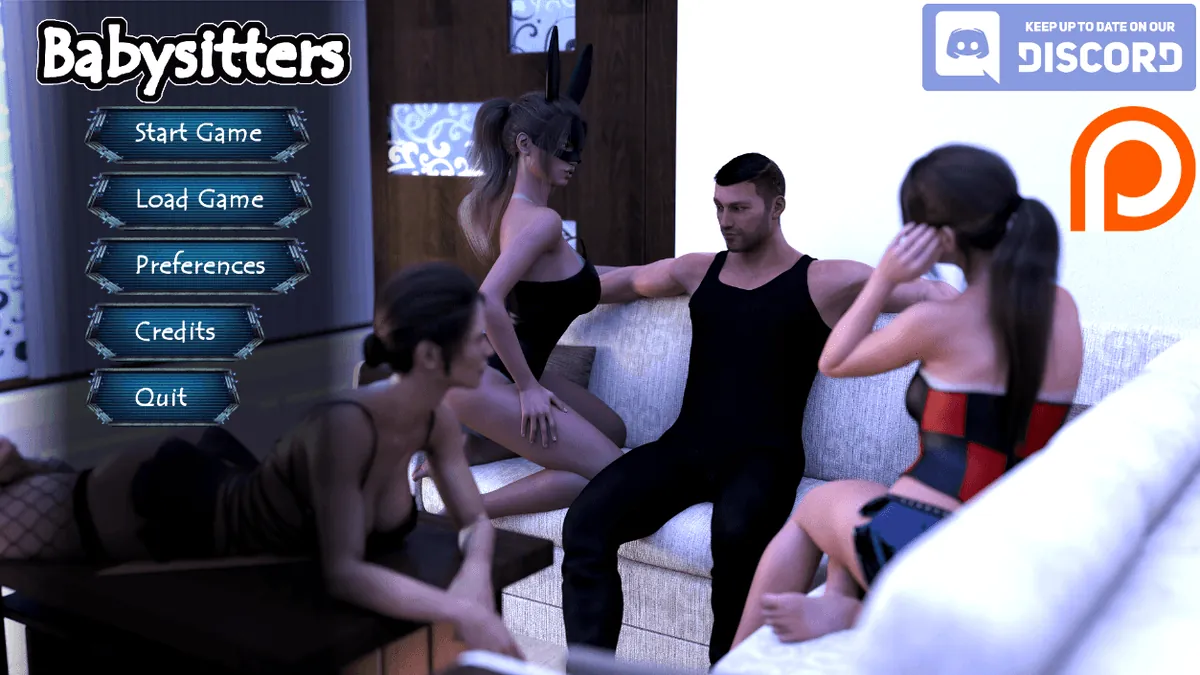
Babysitters
Play Babysitters
Babysitters Screenshots









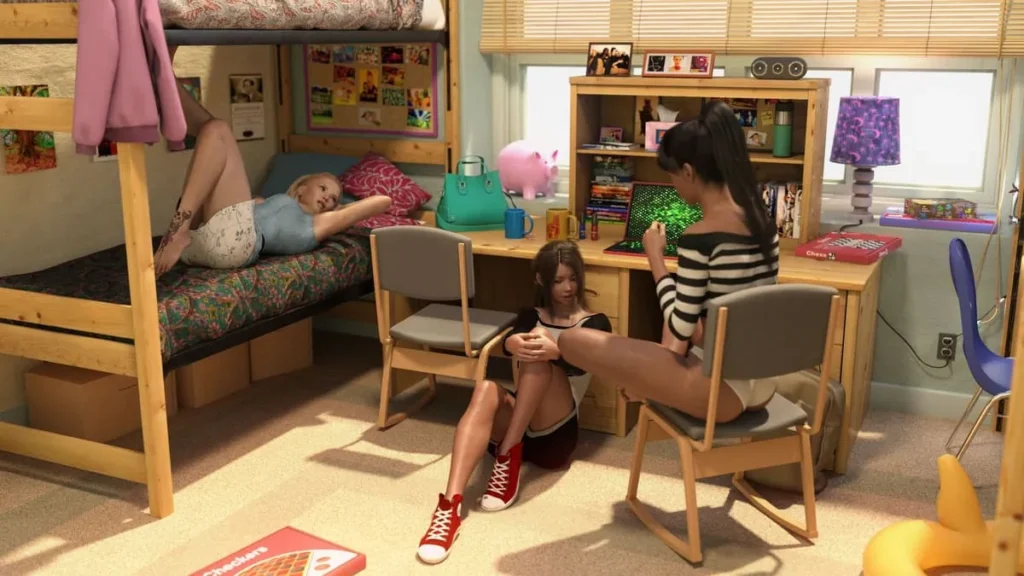
Babysitters review
Master the interactive narrative, character relationships, and branching storylines in this choice-driven adult game
The Babysitters game stands out as an interactive narrative experience that puts player agency at the center of the story. Unlike traditional games focused on combat or puzzles, this choice-driven adventure emphasizes dialogue, exploration, and meaningful decision-making. As you take on the role of a new babysitter in an ordinary-seeming household, you’ll quickly discover that everyone has secrets worth uncovering. The game’s sophisticated dialogue system and branching narratives create a personalized journey where every conversation choice and action directly influences relationships, story outcomes, and which narrative paths become available. Whether you’re interested in understanding the core mechanics, exploring character dynamics, or learning how to unlock different story endings, this guide covers everything you need to know about maximizing your Babysitters experience.
Understanding Babysitters Game Mechanics and Core Gameplay
Ever booted up a game expecting epic showdowns or mind-bending puzzles, only to find your greatest challenge is navigating an awkward family dinner? 😅 Welcome to Babysitters, the interactive storytelling game that swaps swords for social cues and makes every conversation feel like a high-stakes mission. If you’re used to games where you can mash through dialogue, you’re in for a surprise. Here, what you say is the gameplay.
Forget complex skill trees or inventory management. The core of the Babysitters game mechanics is a brilliantly crafted web of talk, trust, and time. Your success isn’t measured in enemies defeated, but in relationships nurtured, secrets uncovered, and the delicate balance of responsibility upheld. It’s a game that respects your intelligence, asking you to listen, observe, and think about the emotional weight of every interaction. Your journey is defined not by a linear path, but by the branching roads you create with your words.
Let’s pull back the curtain and master the systems that make this narrative tick. 🎭
How the Dialogue and Exploration System Works
At its heart, Babysitters is a conversation. The dialogue system gameplay is your primary, and most powerful, tool. You’ll spend your evenings in the company of the family you’re sitting for, and every exchange is a potential turning point. Think of it less like picking predefined “good” or “bad” responses and more like navigating a live, emotional minefield.
The system presents you with branching dialogue options that reflect different attitudes: you can be nosy, supportive, playful, stern, or withdrawn. There’s rarely a single “correct” choice, but each one paints a picture of who your character is in the eyes of others. For instance, early on, you might find a private letter. Do you:
* Open it immediately, satisfying your curiosity?
* Leave it be, respecting privacy?
* Mention it cautiously to its owner?
This isn’t just flavor text. This choice directly seeds future interactions. The person who wrote that letter will remember your intrusion or your discretion, changing how they speak to you for the rest of the game. This is the essence of how player choices affect story—they don’t just change a line of dialogue; they alter character psychology and narrative possibility.
Exploration complements this perfectly. The house isn’t just a backdrop; it’s a vault of context. While the kids are watching TV or during a quiet moment, you can investigate. 🕵️♂️ Looking at family photos, browsing bookshelves, or glancing at a calendar isn’t just filler—it often provides crucial insights into a character’s past or current worries. This knowledge can then inform your conversation choices, allowing you to ask more pointed, empathetic questions or avoid sore subjects.
However, exploration comes with risk. Poking around in someone’s bedroom or private office without permission can backfire spectacularly if you’re caught. It’s a classic risk-versus-reward scenario: the potential to unlock deeper story threads versus damaging hard-earned trust. This layer turns simple movement into a tense, meaningful part of the Babysitters game mechanics.
Player Choice Consequences and Relationship Points
Alright, so your choices matter. But how does the game track that? Enter the invisible architect of your experience: the relationship points system. This isn’t a visible meter on your screen (the game is too subtle for that), but a sophisticated backend scoring system that tracks your standing with every major character.
Every significant interaction adds or subtracts points from these hidden counters. Be a supportive listener when a character is venting? +5 Trust with them. Make a flippant, dismissive comment? -10. It’s a constant, silent tally of your social performance.
The magic happens at specific thresholds. Think of these as invisible gates on each character’s story path. Reach a “Friendly” threshold with the teenage daughter, and she might start confiding in you about her school troubles. Hit a “Distrusted” level with the father, and he may cut conversations short or even give you a stern warning. These thresholds unlock entirely new branching dialogue options, private scenes, and even whole story arcs that are completely inaccessible otherwise.
The player choice consequences are both immediate and glacial. A snappy retort might get an angry glare now, but it also quietly lowers a score, preventing you from receiving a crucial invitation two evenings later. The game is constantly weaving the threads of your actions into the larger tapestry of the narrative.
To see this in action, let’s break down some specific scenarios. Here’s a table showing how a single decision can ripple through the entire story, affecting the relationship points system and the branching dialogue options available to you later.
| Your Action (Player Choice) | Immediate Consequence | Long-Term Narrative Consequence |
|---|---|---|
| You openly flirt with a parent during the first evening. | They become flustered and change the subject. Other characters in the room notice the awkwardness. | Their trust threshold becomes much harder to reach. Future playful comments from you are met with suspicion, not humor. A potential romantic branch may be locked off for being too forward too soon. |
| You help the young son with his homework patiently, even when it makes you late starting dinner. | He’s grateful and smiles. You get a minor scolding for the delayed meal. | His “Affection” score rises significantly. Later, he may choose to tell you a secret he’s keeping, or defend you if another character is angry with you. This opens a unique, caring storyline. |
| You insist on cleaning a parent’s private study without asking, trying to be helpful. | They find you and are visibly upset, asking you to leave the room. | A major “Privacy Violation” flag is set. They will now lock doors that were previously open, and their dialogue becomes more formal and distant. You lose access to exploration areas that could have contained key story items. |
| When a character tests you with a difficult ethical question, you give a thoughtful, nuanced answer instead of a simple one. | The conversation becomes deeper and more philosophical. It might run longer than scheduled. | You unlock a special “Intellectual Respect” threshold. This character will later seek you out for serious conversations, revealing backstory and motivations that are otherwise hidden, fundamentally changing your understanding of the plot. |
My Personal Insight: On my first playthrough, I played it “safe” and neutral, afraid to offend anyone. The result? A bland, surface-level story where no one truly opened up. It was only when I dared to be a person—with specific opinions, curiosities, and flaws—that the game’s brilliant interactive storytelling game design shone. The consequences of my messy, human choices made the narrative infinitely more rewarding.
Real-Time Evening Format and Story Pacing
One of the most distinctive Babysitters game mechanics is its structural rhythm. The game is divided into evenings, each operating in a loose “real-time” format. 🕘 You have from roughly dinner time until the parents return home. Within that window, you have a set list of duties (feed the kids, help with bath time, get them to bed) and a golden resource: free time.
This is where strategy comes in. You cannot be everywhere at once. You must choose how to spend your pockets of free moments. Do you:
* Corner the moody teenager in her room for a heart-to-heart?
* Offer to help clean the kitchen with a parent to build rapport?
* Sneak a quick investigation of that mysterious locked drawer in the hallway?
* Or just take a quiet breather on the porch, which might lead to an unexpected encounter?
The pacing is masterful. Early evenings are chaotic, filled with the bustle of meals and childcare, limiting your opportunities for deep talk. As the night wears on and the house settles, the atmosphere shifts. Conversations become quieter, more confidential. The story pacing mimics real life—secrets are spilled in the quiet hours, not during the dinner rush.
This format makes every choice about priority. Investing time in one character means neglecting another. Missing a key duty (like forgetting to check on the sleeping toddler) can trigger negative events that overshadow your positive social progress. It creates a wonderful tension between your role as a responsible caretaker and your curiosity as a player unraveling a story.
The game brilliantly withholds information, forcing you to live with the uncertainty of your decisions. You won’t know if a conversation was a “success” until much later, when a character’s behavior shifts or a new path unfolds. This mirrors life’s own messy relationships and is the cornerstone of what makes this interactive storytelling game so compelling. You’re not following a story; you’re collaborating with the game to write one, one cautious conversation and one risky exploration at a time.
Ultimately, mastering Babysitters isn’t about finding a walkthrough or a “best” ending. It’s about embracing the weight of your words and the value of your time within its world. The dialogue system gameplay and the relationship points system are tools for crafting a unique, personal narrative filled with meaningful player choice consequences. So, the next time you’re faced with a branching dialogue option, remember: you’re not just picking a line. You’re architecting a relationship and steering the very soul of the story. Now go on, your next evening is about to begin. 😉
The Babysitters game delivers a compelling interactive experience that prioritizes meaningful player agency and narrative depth. By combining an elegant dialogue system with sophisticated relationship mechanics, the game creates a personalized journey where every choice genuinely matters. The real-time evening format, household exploration, and character-driven storytelling work together to immerse players in uncovering secrets and building relationships. With multiple branching paths, varied endings, and high replayability value, the game rewards players who engage thoughtfully with the narrative. Whether you’re drawn to choice-driven storytelling, character-focused gameplay, or exploring how your decisions shape outcomes, Babysitters offers a rich interactive experience that respects player intelligence and creates satisfying, earned moments throughout your playthrough.